Paternal grandfather
Richard Joseph Lambert
United States Coast Guard · USCGC Bibb · USCGC Sorrel · Korean War
Service
Coast Guard service during the Korean War aboard the Treasury-class cutter USCGC Bibb and the Cactus-class buoy tender USCGC Sorrel — both homeported in Boston.
- Branch
- United States Coast Guard
- Ships
- USCGC Bibb (WPG-31); USCGC Sorrel (WAGL/WLB-296)
- Rank
- To be confirmed
- Service dates
- To be confirmed (Korean War era)
Richard served during the Korean War era aboard USCGC Bibb and USCGC Sorrel, both working out of Boston in those years. Exact enlistment, separation, and ship-by-ship dates are not yet confirmed from family papers or Coast Guard muster rolls.
Photographs
Family photographs from Richard’s Coast Guard service, plus the cutters he served on.
-
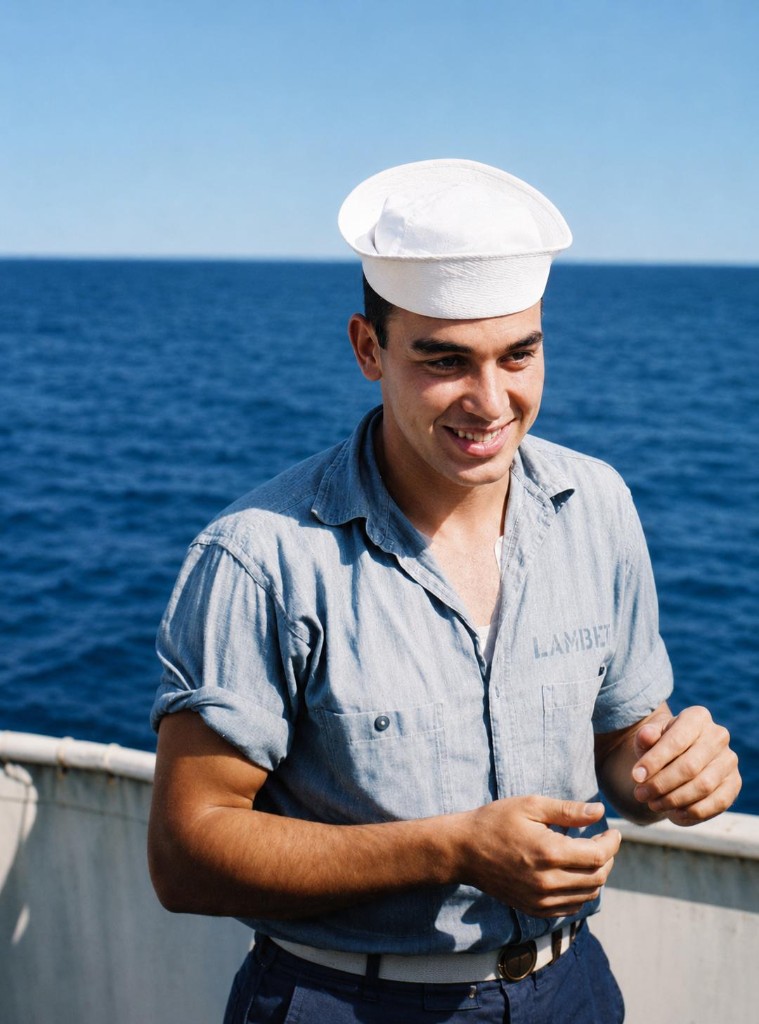
On deck aboard USCGC Bibb — chambray work uniform with “LAMBERT” stenciled above the pocket. -
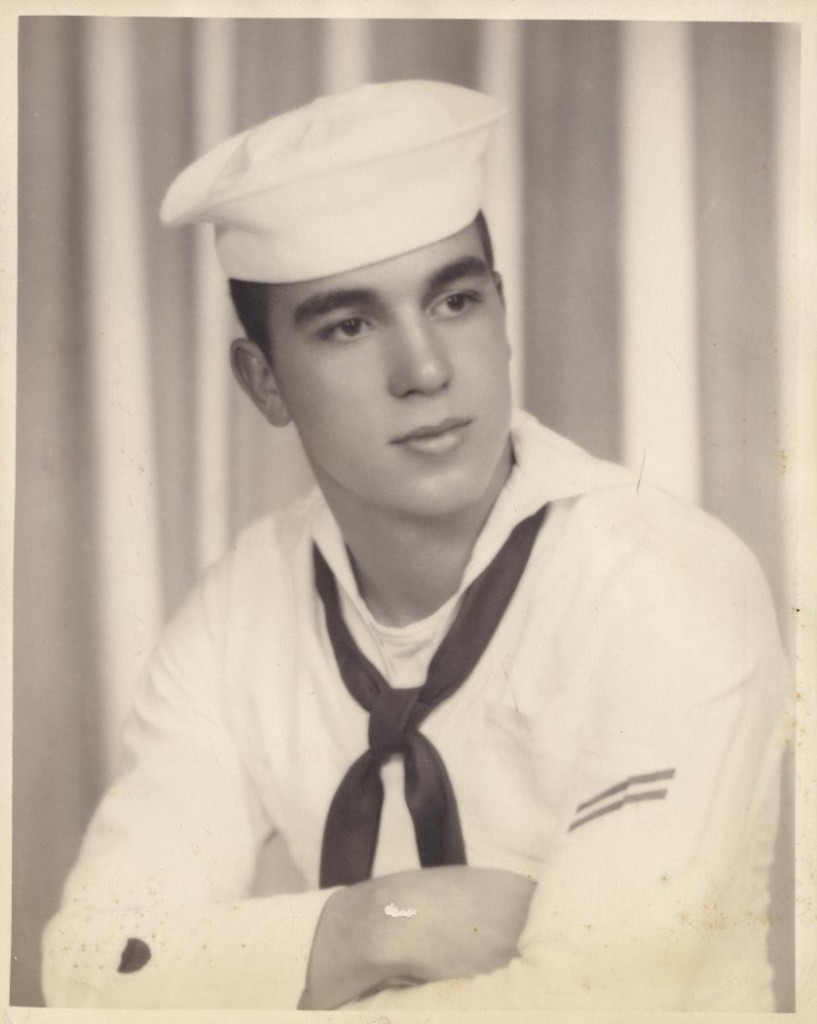
Studio portrait in Coast Guard dress whites. -
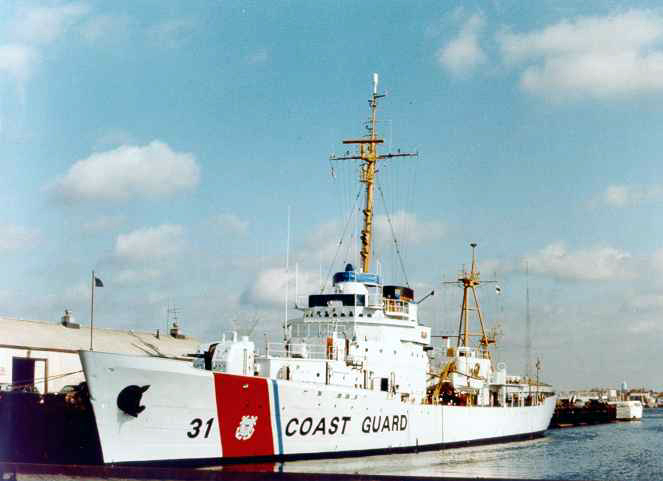
USCGC Bibb (WPG-31), the Treasury-class cutter Richard served aboard during the Korean War era. U.S. Coast Guard photograph (public domain). -
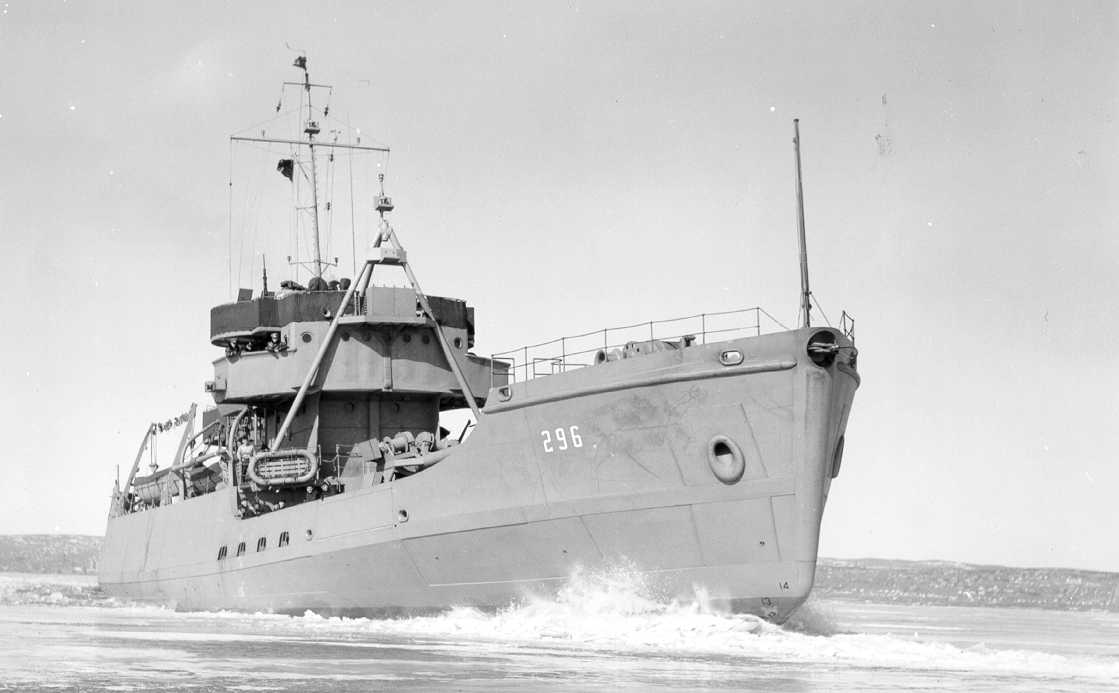
USCGC Sorrel (WAGL/WLB-296), the Cactus-class buoy tender Richard also served aboard. U.S. Coast Guard photograph (public domain).
Coast Guard in the Korean War
When North Korea invaded the South in June 1950, the Coast Guard expanded port security, weather reporting, and search-and-rescue support. Pacific ocean-station cutters fed weather data to forces bound for Korea; Atlantic stations — including those worked by Bibb out of Boston — supported transatlantic air and surface traffic with weather observations, radio relays, and SAR standby. Richard’s two cutters were both Boston ships in those years — Bibb on ocean stations, Sorrel tending buoys and answering SAR calls along the New England coast.
- Richard’s ships
- USCGC Bibb (WPG-31) and USCGC Sorrel (WAGL/WLB-296)
- Homeport (era)
- Boston, Massachusetts
USCGC Bibb
A 327-foot Treasury-class cutter, Bibb was homeported in Boston during the Korean War and stood North Atlantic ocean-station patrols — three-week weather and communications watches that also served as search-and-rescue platforms for transatlantic air and surface traffic. She did not deploy to the combat theater.
- Hull number (era)
- WPG-31 (later WHEC-31 in 1965; WAGC-31 during WWII Pacific service)
- Class
- Treasury-class (327-foot) cutter
- Commissioned
- 10 March 1937
- Typical duty (era)
- Ocean-station weather patrol, SAR, communications relay
- Decommissioned
- 30 September 1985
Korean War-era ocean stations included How (June–July 1950), Dog (October 1950), Easy (December 1950), Charlie (March–April 1952), Echo (November–December 1952), Coca (February 1953), and Delta (July 1953).
USCGC Sorrel
A 180-foot Cactus-class (Class A) seagoing buoy tender, Sorrel was built by Zenith Dredge in Duluth, Minnesota, and commissioned on 15 April 1943. During the Korean War years she was based in Boston (returning there in October 1948 and remaining until May 1954), maintaining aids to navigation, icebreaking, and search and rescue — often working the New England coast and periodically out of Argentia, Newfoundland.
- Hull numbers
- WAGL-296 / WLB-296
- Class
- Cactus-class (180-foot) buoy tender
- Commissioned
- 15 April 1943
- Boston years
- 1943–1947; 1948–1954
- Later homeports
- Sitka, Seward, Cordova (Alaska); Governor’s Island, New York
- Decommissioned
- 20 June 1996
Korean War-era calls included rescuing eight from North Voyager (Oct 1950), assisting after a collision near Boston (Nov 1951), and towing disabled fishing vessels into Portland and Boston (1952–53).
Boston cutters during the Korean War
Until muster rolls or family papers confirm Richard’s exact dates on each ship, this timeline follows what Bibb and Sorrel were doing out of Boston during the war.
-
June 1950
War begins
North Korea crosses the 38th parallel (25 June). The Coast Guard expands ocean-station coverage — especially in the Pacific — and later that year takes on expanded U.S. port-security duties after the Magnuson Act (August) and Executive Order 10173 (October).
-
1950
Bibb on station; Sorrel on SAR
Bibb, homeported in Boston, serves on North Atlantic ocean stations — including Dog (October) and Easy (December). That same October, Sorrel rescues eight crew from the motor vessel North Voyager.
-
1951–1952
Atlantic patrols & New England assists
Bibb rotates through ocean-station assignments; in February 1952 a Navy tug collides with her in Narragansett Bay. Sorrel assists after a collision near Boston (November 1951) and tows the disabled fishing vessel Richard J. Nunan into Portland (July 1952).
-
1952–1953
Echo, Coca, Delta & armistice
Bibb: Ocean Stations Echo (late 1952), Coca (February 1953), and Delta (July 1953) — the same month as the Korean Armistice. Sorrel tows the disabled fishing vessels Geraldine and Phyllis into Boston in February 1953. Both cutters remain Atlantic/New England ships through the armistice.
About this page
Richard’s service is remembered here as Korean War–era Coast Guard duty aboard Bibb and Sorrel. Rank, enlistment, separation, and which years he spent on each ship can be filled in when family papers or NARA muster rolls confirm them.
No public digitized crew list naming Richard on either cutter turned up online; ship histories for both vessels are well documented.
Sources
- U.S. Coast Guard Historian’s Office — Bibb, 1937
- Wikipedia — USCGC Sorrel (WLB-296)
- Library of Congress — HAER NY-328, U.S. Coast Guard Cutter SORREL
- National Coast Guard Museum — Coast Guard in Korea
- U.S. Coast Guard — Korean War chronology (PDF)
- National Archives — Coast Guard muster rolls (research path)
Hero photograph: Family photograph